All products are for laboratory research purposes only. Not for human consumption.
Comparison
GLOW vs KLOW: What the Extra Letter Changes
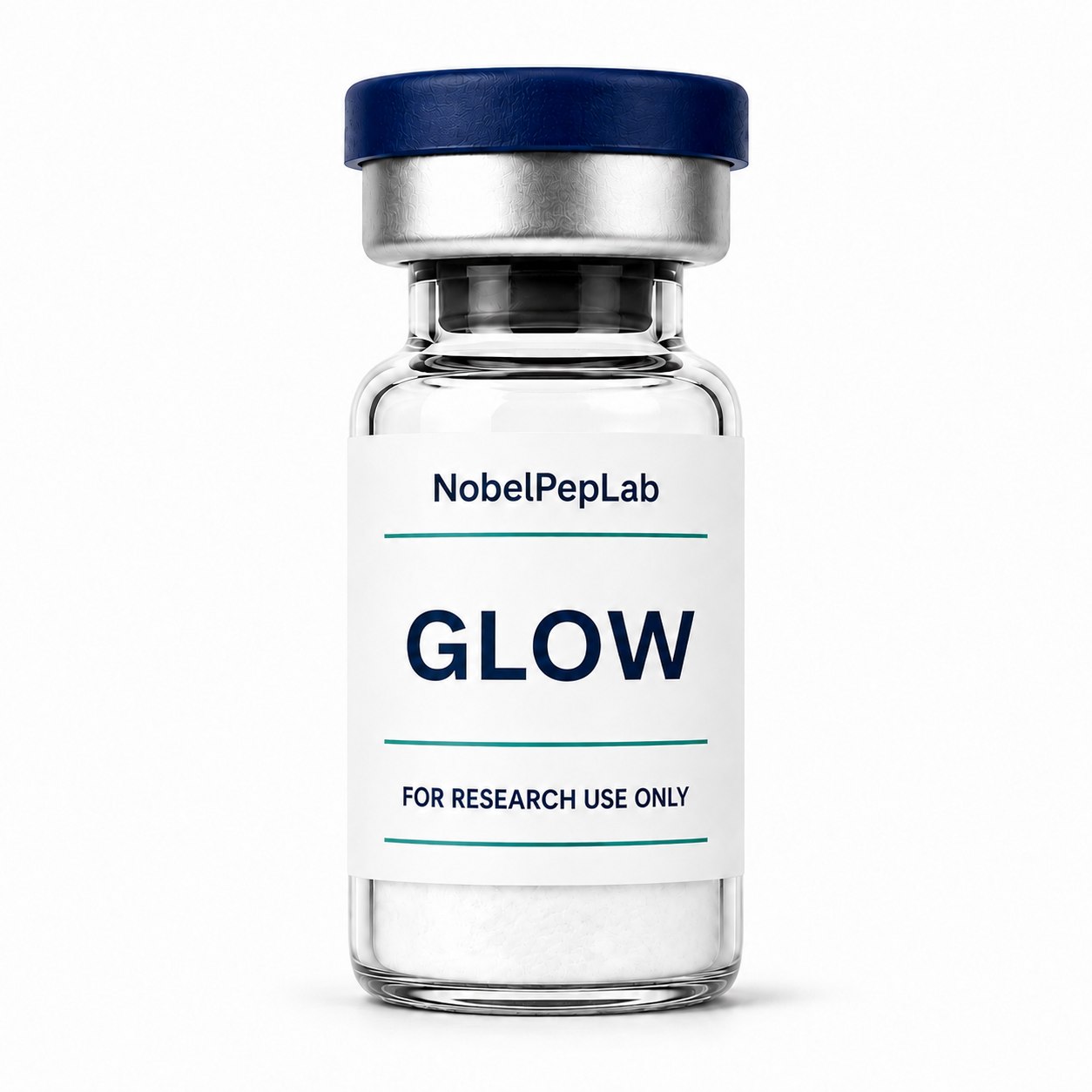
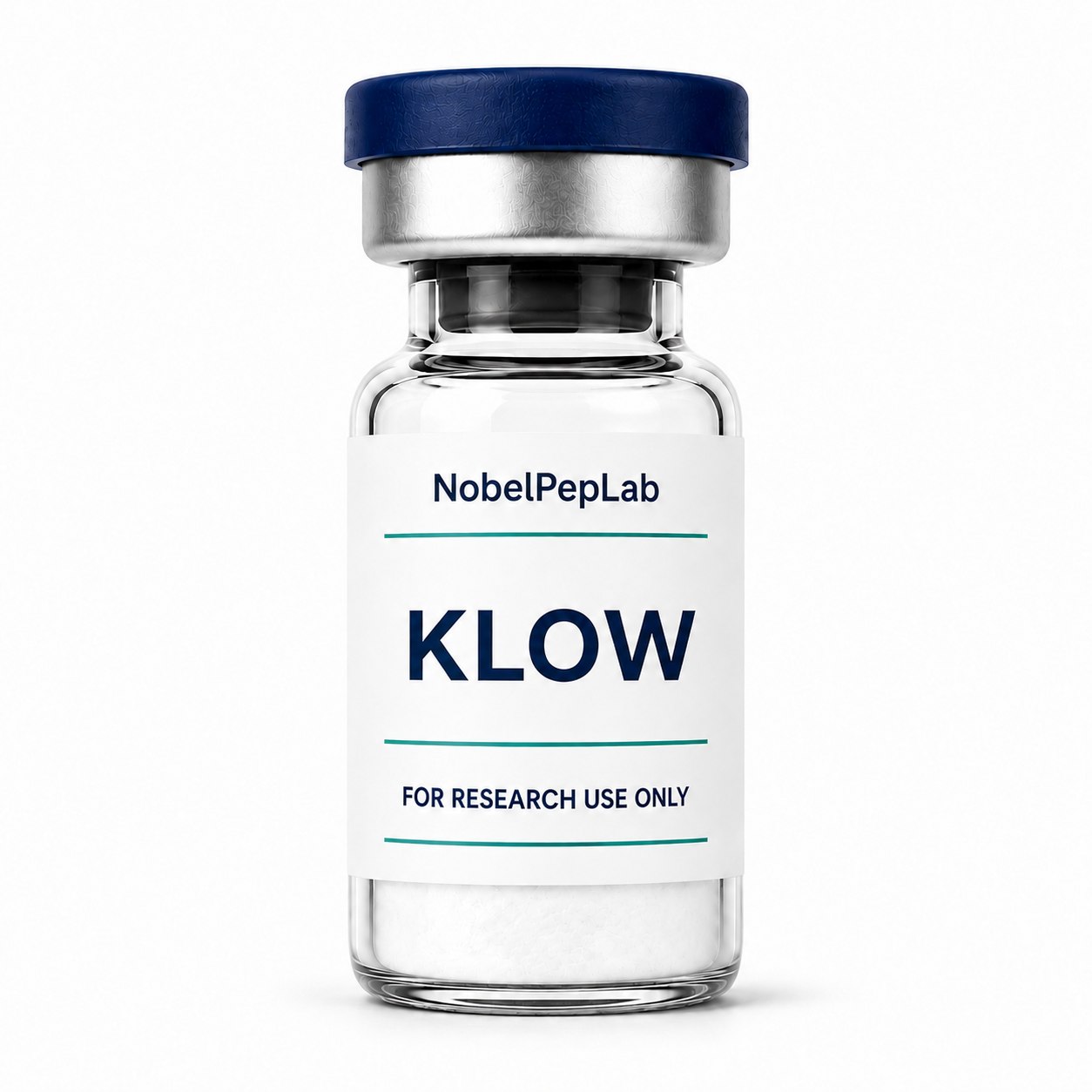
These two blends differ by exactly one component. That makes them unusually easy to compare, and unusually useful as a matched pair in a research setting.
The short answer
Side by side
| GLOW | KLOW | |
|---|---|---|
| Classification | Research blend: BPC-157, GHK-Cu and TB-500 co-lyophilised in one vial | Research blend: BPC-157, GHK-Cu, TB-500 and KPV co-lyophilised in one vial |
| Strengths | BPC-157 10 mg + GHK-Cu 50 mg + TB-500 10 mg | BPC-157 10 mg + GHK-Cu 50 mg + TB-500 10 mg + KPV 10 mg |
| From, per vial | $17.57 £13.88 | $19.00 £15.01 |
| From, per box of 10 | $175.71 £138.81 | $190.00 £150.10 |
| Research status | Of the three components GHK-Cu carries the strongest evidence, with decades of human skin data behind it; BPC-157 and TB-500 are preclinical only. The three together have not been studied - no published trial has tested this combination, and no stability data exists for a copper complex co-lyophilised alongside two other peptides. Not approved as a formulation anywhere, and BPC-157 and TB-500 are prohibited in competitive sport under WADA S0. | GHK-Cu carries human skin data; KPV, BPC-157 and TB-500 are preclinical, with KPV the best characterised of those three through rodent colitis models. The four together have not been studied - no published trial has tested this combination, or any subset of it. Not approved as a formulation anywhere, and BPC-157 and TB-500 are prohibited in competitive sport under WADA S0. |
In detail
What the research actually compares
Descriptions of published research activity and findings. Nothing here is a claim about what these products do, or a statement that either is safe or effective for any purpose.
The only variable is KPV
Because the amounts of the other three components are identical, the two preparations differ by one factor. That is what makes them a usable comparison pair: any difference observed between them in a given model is attributable to the KPV addition rather than to a changed ratio of everything else.
What KPV contributes
KPV is the final three residues of alpha-melanocyte-stimulating hormone. Published work reports that it reduces NF-kB signalling in cultured cells and lowers tissue damage scores in rodent colitis models, and that it is carried into cells intact by the PepT1 transporter. Controlling inflammation is the one property the other three components are not primarily studied for.
What the other three are studied for
GHK-Cu is the best-evidenced of the group, a copper-carrying tripeptide reported to increase collagen and matrix protein production in skin fibroblast culture, with decades of cosmetic use behind it. BPC-157 and TB-500 are rodent and cell-culture work on blood vessel formation and cell migration respectively.
What is not established for either
No animal or human study has tested either combination. Copper complexes can interact with other molecules in solution, and no stability or compatibility data has been published for a copper peptide co-lyophilised alongside two or three others. Adding a fourth peptide multiplies the untested interactions rather than reducing them.
Common questions
What is the difference between GLOW and KLOW?
KLOW is GLOW plus KPV. Both contain BPC-157 10 mg, GHK-Cu 50 mg and TB-500 10 mg per vial; KLOW adds KPV 10 mg. Nothing else differs.
Is KLOW better than GLOW?
There is no evidence either way. Neither combination has been studied, so no comparative claim can be made. The difference is the presence of KPV, which is studied separately for anti-inflammatory activity.
Why do the blends cost more than the individual peptides?
Each vial contains several compounds co-lyophilised together, so you are buying more total material per vial. GLOW is $17.57 per vial and KLOW $19.00, against $7.97 for BPC-157 alone at 10 mg.